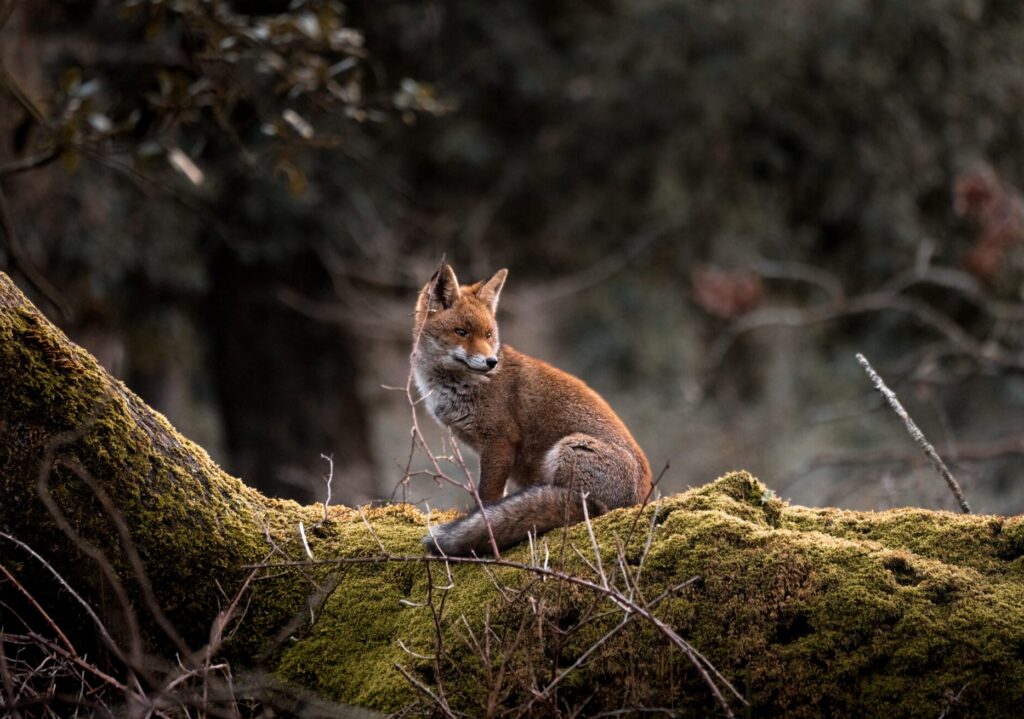
RED DEER
The red deer (Cervus elaphus) is one of the largest species of deer in the family Cervidae. Hunting period for red deer starts at 15th August, when it’s allowed to hunt red deer cow and calf, until 31. January. Calling hunt during rutting time for red deer stag starts from 1. September and the hunting season continues with calling, stalking and driven hunts from 1. October until 15. February. We usually provide driven hunts on red deer from 1. October until 31. January and it’s also possible to do stalking hunt during that time.
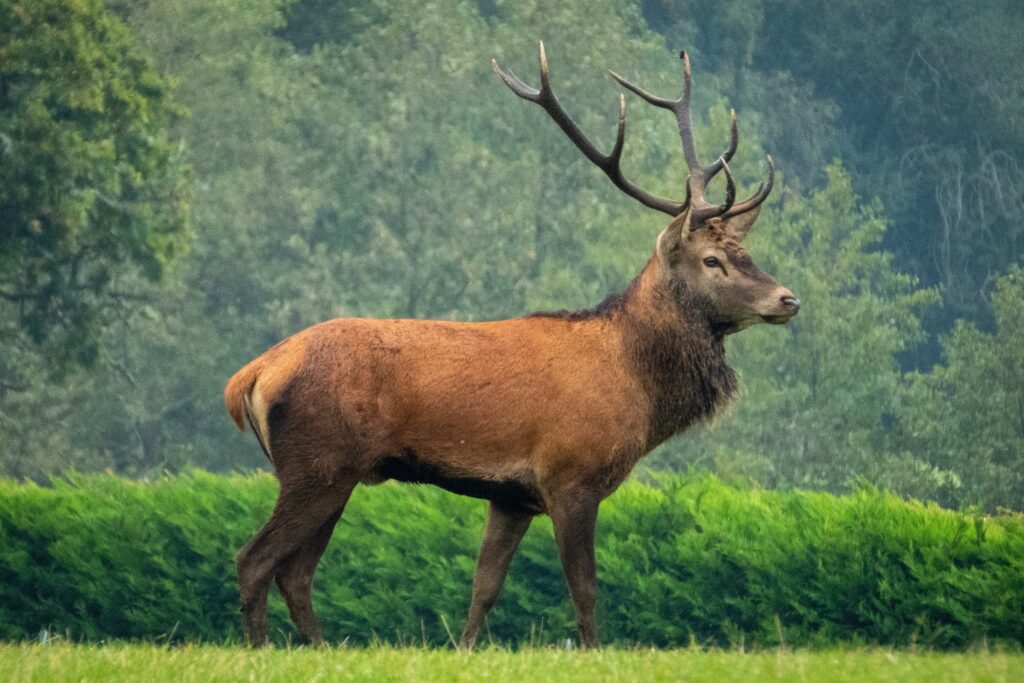
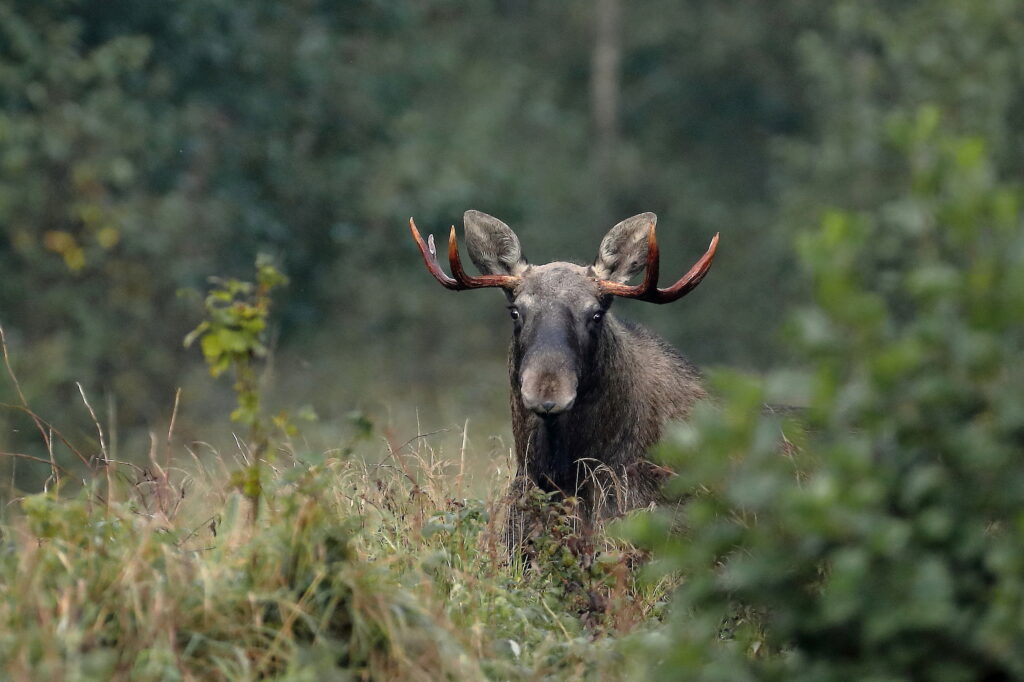
ELK
The elk (European moose) (Alces alces) is a mammal belonging to the family Cervidae, genus Alces. The elk is the biggest true deer. It is also the largest land mammal in Europe. The elk is a meek animal with long legs and a high neck. Adult specimens can weigh until 500 kg. In terms of habitat they prefer larger, more humid forest areas. Their fur is generally brownish-black, with minor differences between subspecies. The upper parts of the body, the body lines, and the head have a dark tone, while the lower part and the feet are lighter. The size of the antlers depends on where the elk lives. European elk antlers can weigh average 10 kg. Estonia has an estimated population of 12,000 elk. Calling hunts, hunting from hides, and stalking hunts can be organised for elk from 15. September until 30. September; and hunting from hides, stalking hunts, driven hunts and hunts with hunting dogs from 1. October to 15. December.
ROE DEER
The roe deer (Capreolus capreolus) is a cloven hoofed animal belonging to the Cervidae family, genus Capreolus. Roe deer have a light body and strong, thin legs. The fur of roe deer is brownish-red in colour during warmer periods of the year, greyish during winter. The roe deer feeds primarily on grasses during summer, branches and shoots during winter. Calling hunts, hunting from hides, and stalking hunts can be organised for roe bucks from 1. June to 30. September, and does and calves from 1. September to 31. January.
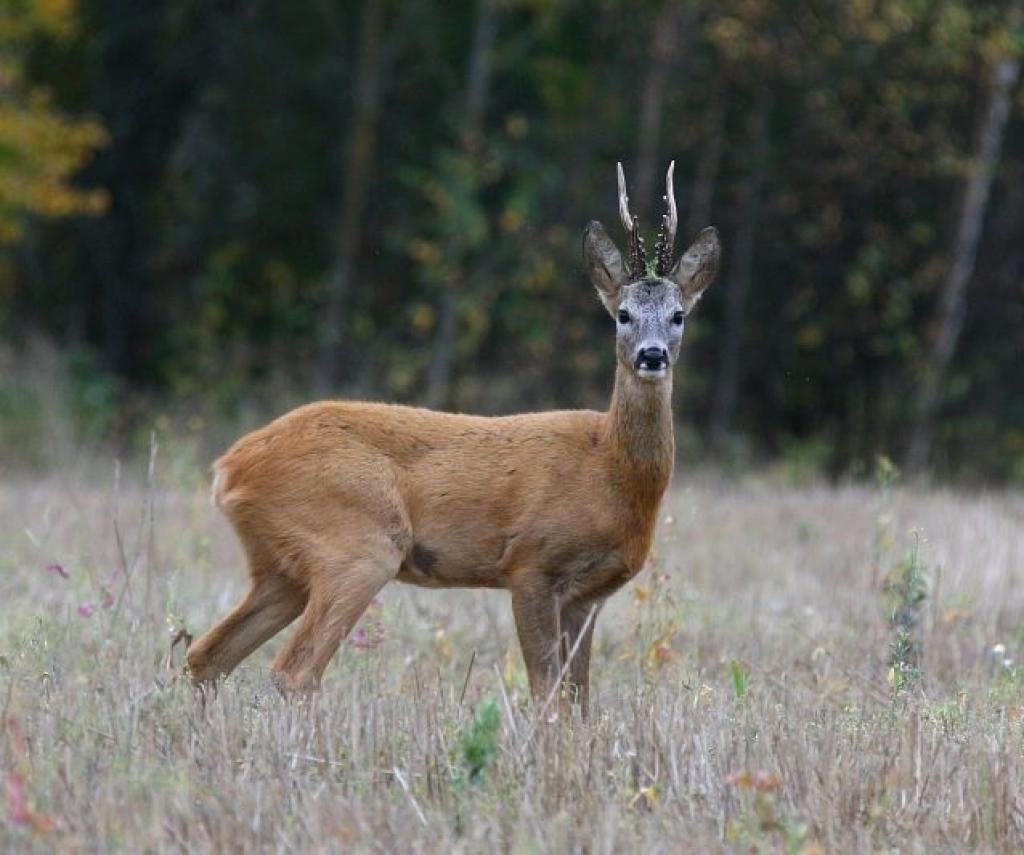
WILD BOAR
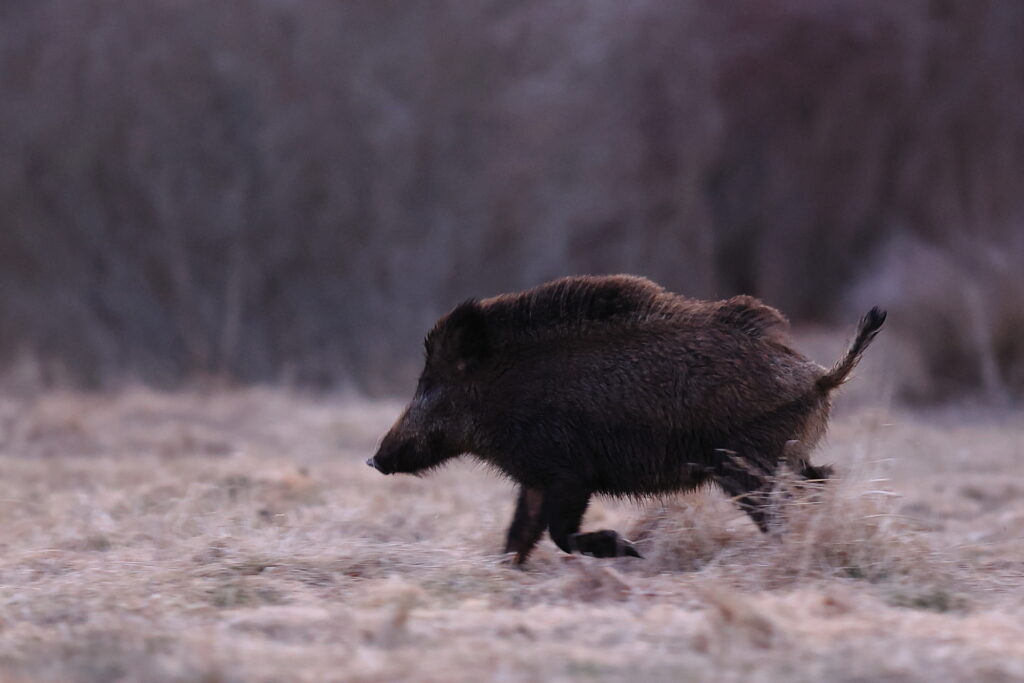
The wild boar (Sus scrofa) is a wild animal belonging to the family Suidae, genus Sus. The body of the boar is covered with coarse brush like hairs, the colour of which varies from dark grey to dark brown. The body of the boar is bulky. Piglets are born with light stripes, which fade between the second and sixth month of life. Their fur achieves adult coloration by the end of the first year of life. The males are usually bigger than the females, and the males have tusks. The lifespan of wild boars is usually 9-10 years, although they may even live up to 25 years. Hunting from hides, and stalking hunts can be organised for wild boar year-round; and driven hunts and hunts with hunting dogs can be organised from 1. October until the end of hunting season.
WOLF
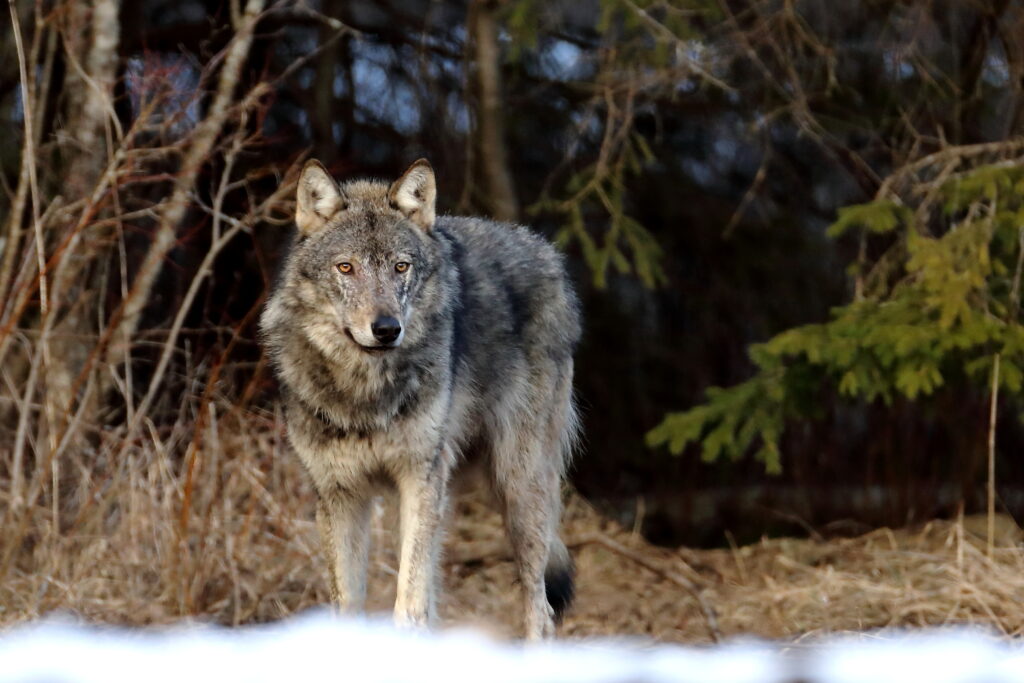
The wolf (Canis lupus) is a canid inhabiting the northern hemisphere, a member of the order Carnivore, genus Canis. Natural characteristics of the wolf include mostly grey fur, pricked ears, slanted yellowish eyes and a bushy tail. Wolves have a sharp sense of smell and hearing. The wolf is primarily a nocturnal animal, with its rhythm of activity varying depending on its habitat and the time of year. Hunting the wolves is allowed from 1. November until the end of hunting season.
BEAVER
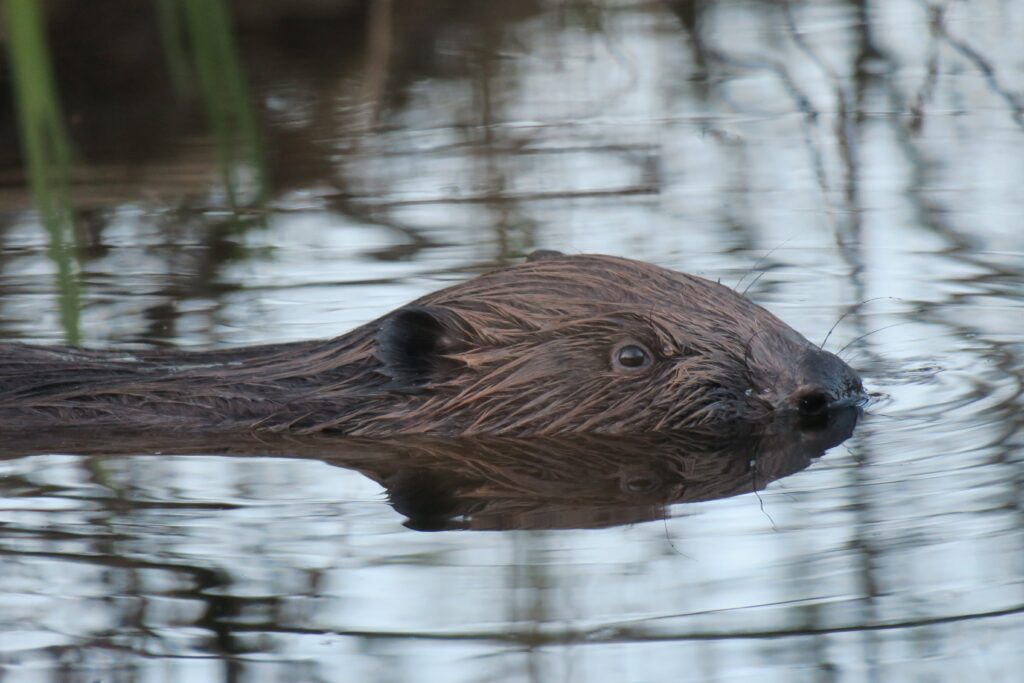
The Eurasian beaver (Castor fiber) is the only present day member of the order Rodentia, family Castoridae. Beavers move on land with their paws and swim in water with their tails. Beavers are large rodents – up to a metre in length and weighting up to 30 kg. They have a bulky body. Fur colour varies from light brown to nearly black. The tail is covered in scales. Beavers may be hunted from 1 August to 15 April.
BROWN BEAR
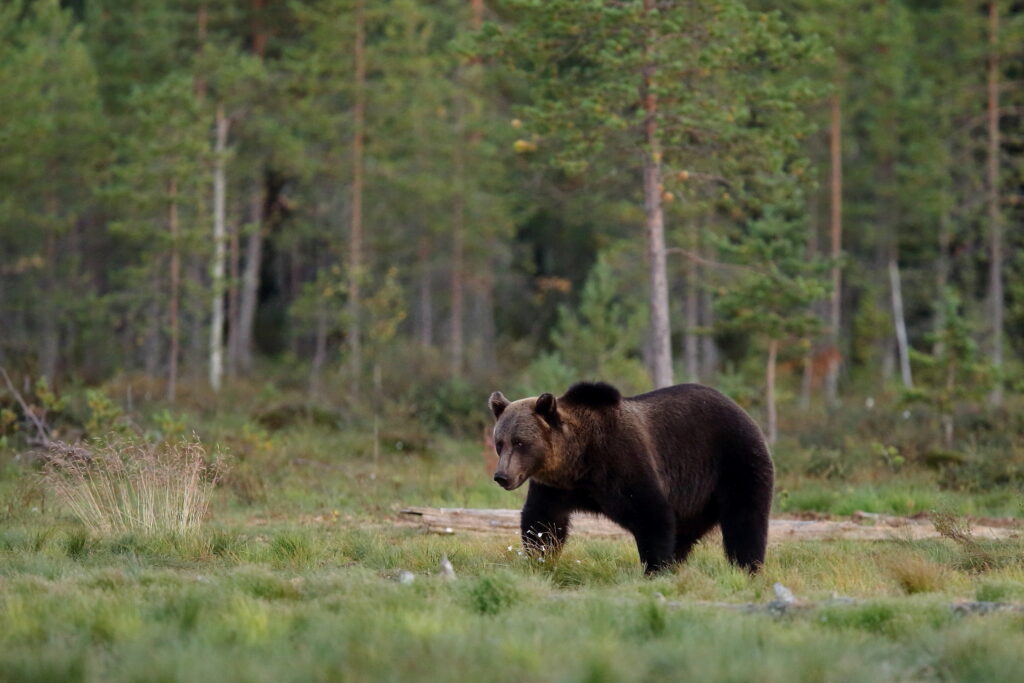
The brown bear (Ursus arctos) The biggest predator of Estonian forests. The bears living here belong to the medium-sized breed, weight 90 – 340 kg.
A large, strong, clumsy animal covered with dense fur. Extra long hairs grow on the withers, the tip of the tail is hidden inside the hairs. The color of the fur varies from brownish yellow to blackish brown.
The male bear is much larger than the female. The weight of Estonian bears is probably between 90 and 250 kilos.
The size of the bear can be judged by the width of the metatarsal of the front paw: 5–6.5 cm bear cub of the same year, 8–10 – bear born last year (1.5 years), 11–13 . adult female bear, 14-17 – adult male bear, 20 and over – very large male bear. As a rule, the lifespan does not exceed 30-35 years.
Bears may be hunted from 1. August to 31. October in Estonia.
FOX
The fox (Vulpes vulpes) is a predator belonging to the family Carnivora, genus Canidae. The fox is the size of a small dog, with a long bushy tail. The fur on the back of the fox is orange in colour. In Estonia, foxes inhabit patches of forest. Foxes feed primarily on rodents. The fur on the back is usually rust-brown to reddish yellow in colour, with dark fur and sometimes an unusually dark pattern in the middle of the back. The fur on the abdomen is ash grey or sometimes black. The lower parts of the paws are typically black and the end of the tail is white. The snout is narrow and long, a natural characteristic of the red fox. Calling hunts, hunting from hides, stalking hunts and hunting with traps may be held from 1. August until 31. March; den hunt or driven hunts with hunting dogs may be held from 1. October to 28. February.